We're in beta! If you find a bug or have feedback, let us know in our

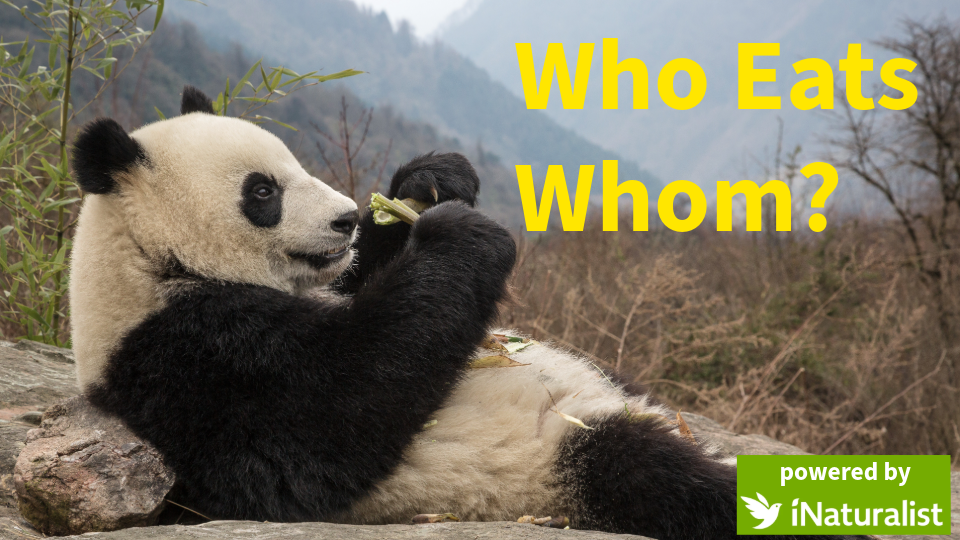
Who Eats Whom?
Create a database for learning what different animals eat
- Ongoing
More Information
All animals must eat to survive, from aphids and alligators to whales and woodpeckers. Because of this, knowing what different animals eat is essential to knowing how best to conserve them. Unfortunately, we lack detailed information on the diets of many species because it is rare to observe these often fleeting, transient events in the field.
Fortunately, the advent of photograph-based citizen/participatory science databases like iNaturalist and eBird has made it much easier to collect information on animal diets. By crowdsourcing wildlife observations across millions of people around the world, these projects generate thousands of records of rare events, such as feeding interactions.
We created Who Eats Whom to centralize these records. Specifically, we created a project on iNaturalist where anyone in the world can submit photographs of animals feeding. Once the iNaturalist community identifies the species involved-- say, a Red-tailed Hawk eating an Eastern Garter Snake, the record is then sent to our website, www.WhoEatsWhom.org. Once there, anyone can search for this record (for example, by searching for “Who eats Garter Snakes?”
Our ultimate goal is for Who Eats Whom to serve as a “one stop shop” for ecologists and members of the public to learn what different animals eat, based on our growing database of records. As more and more people participate in the project, we will gain even greater insight into the global ecological network of relationships that sustains the biosphere.
Ticket Required: No
Minimum Age: 13
Languages: English